
Credit Score in India: How to Check & Improve Your CIBIL Score in 2026
MoneyUtility Team
Financial Planner
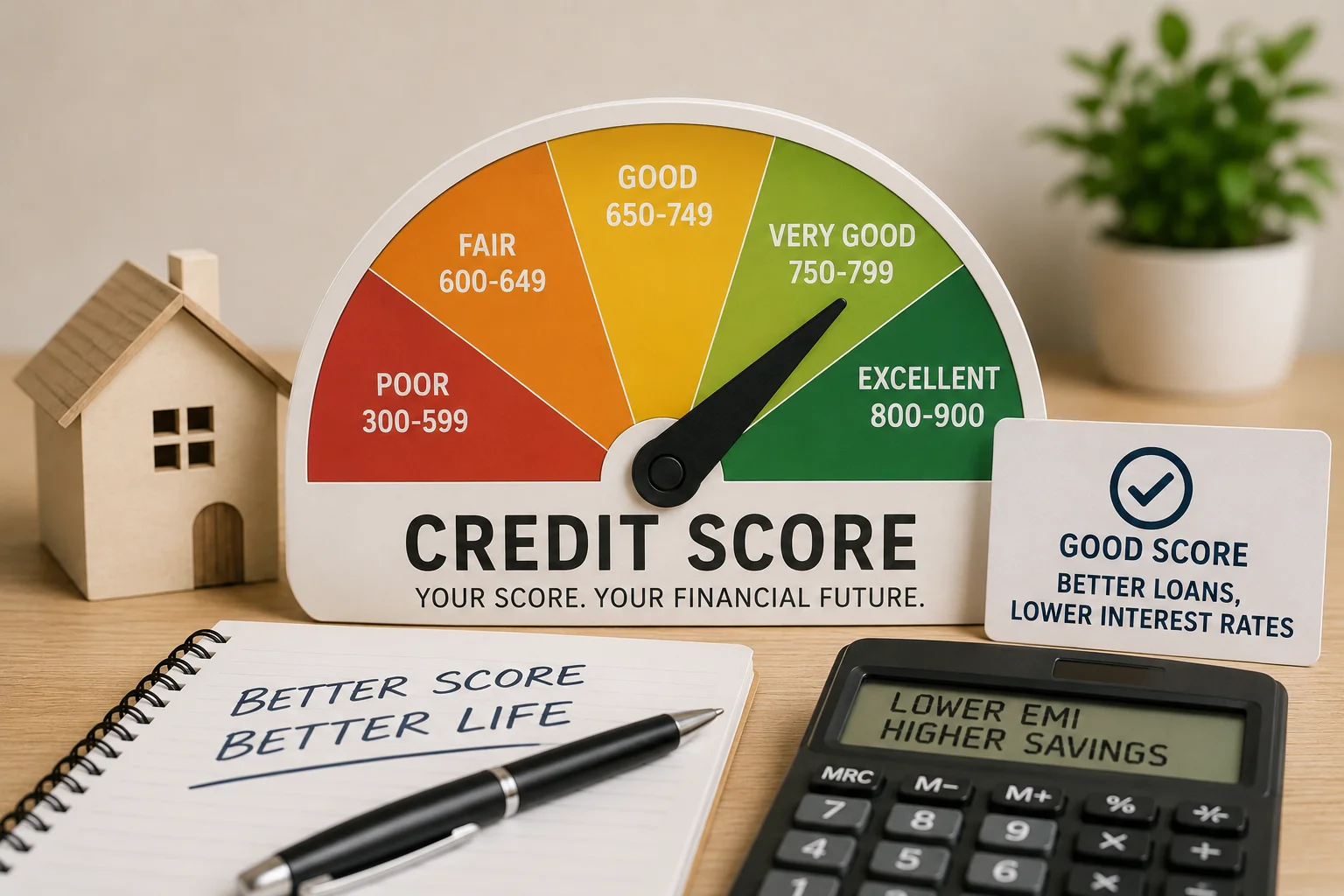
If you are planning to apply for a loan or a new credit card, learning how to improve credit score India 2026 is the single most critical financial step you can take today. A poor credit score isn't just a minor administrative hurdle; it has real, long-term financial consequences that can cost you lakhs of rupees in interest rates over your lifetime. Whether you are aiming to buy your first home or restructure your debts, your creditworthiness will dictate the financial terms of your future.
Table of Contents
1. A Bad Credit Score Could Cost You ₹5 Lakh on Your Home Loan
To understand the real-world impact of your credit profile, let's look at a concrete case. Imagine two colleagues, Borrower A and Borrower B, who both apply for the exact same ₹50L home loan with a 20-year tenure at the same bank.
- Borrower A has a healthy credit history with a CIBIL 780. The bank offers them an excellent interest rate of 8.5%.
- Borrower B has defaulted on a past credit card bill, leaving them with a CIBIL 640. The bank flags them as high-risk and charges a steep interest rate of 10.25%.
When you run these numbers through a standard EMI Calculator, the disparity is shocking:
- Borrower A pays a monthly EMI of ₹43,391, leading to a total interest payment of ₹54,13,879 over the 20-year timeline.
- Borrower B pays a monthly EMI of ₹49,082, resulting in a total interest payment of ₹67,79,721 over the 20-year tenure.
This means Borrower B pays an extra ₹5,691 every single month. Over the course of the loan, Borrower B will shell out a staggering ₹13,65,842 (nearly ₹13.66 Lakh) in extra interest! While the title says a bad score could cost you ₹5 Lakh, the reality is that the penalty can easily exceed double that amount depending on your credit tier and the loan quantum. If you want to see how different parameters change your interest liabilities, you can read our loan tenure impact guide.
2. What is a Credit Score and Who Calculates It?
A credit score is a 3-digit number ranging from 300–900 that represents your overall creditworthiness. Think of it as a financial report card that summarizes how responsibly you manage debt. When you apply for a credit card, a personal loan, or a home loan, financial institutions use this number to quickly gauge the probability of you defaulting on your payments.
In India, credit scores are calculated by four major credit bureaus licensed by the Reserve Bank of India (RBI):
- TransUnion CIBIL: Established in 2000, CIBIL is the oldest and most widely recognized credit bureau in India. Most major public and private sector banks refer to the CIBIL score.
- Experian: A global bureau that is highly active in the Indian market, particularly favored by fintech lenders and private banks.
- Equifax: Gaining rapid popularity, Equifax provides highly detailed credit registries, specifically for retail loans and micro-credit portfolios.
- CRIF High Mark: A prominent bureau that focuses heavily on micro-finance sectors, rural loans, and commercial credit profiles.
Each bureau uses its own proprietary algorithms and data structures, which is why your score may vary slightly across them. However, they all pull data from the same financial institutions. Under RBI mandates, every citizen is entitled to a free CIBIL score check Indiaoption directly through the bureau's official website once a year. Additionally, many banks and digital fintech apps offer free monthly checks to help consumers track their credit health continuously.
3. Credit Score Ranges: What Does Your Score Mean?
Understanding where your score stands is crucial to anticipating how banks will treat your application. In India, credit bureaus align their scoring systems within a standard CIBIL score range India format as detailed below:
| Score Range | Rating | What It Means for Loans |
|---|---|---|
| 750–900 | Excellent | Best interest rates, instant digital approvals, and access to premium pre-approved credit cards. |
| 700–749 | Good | Approved easily with standard market interest rates; minor negotiations are possible. |
| 650–699 | Fair | Approval possible but requires extensive documentation. Expect higher interest rates and lower limits. |
| 600–649 | Poor | Likely rejected by major public and private banks. NBFCs may approve at very high interest rates. |
| Below 600 | Very Poor | High risk of immediate rejections. Only accessible via high-interest predatory lenders or secured credit options. |
If your current score sits in the fair or poor ranges, you must prioritize credit repair. When you are looking to purchase real estate, one of the first questions you must answer is what is good CIBIL score for home loan applications in India. Most top tier banks expect a minimum score of 750+ to qualify for their lowest advertised repo-linked lending rates (RLLR). A lower score shifts you to a higher risk tier, immediately adding a premium of 0.5% to 1.5% to your base home loan rate.
4. The 5 Factors That Make Up Your Credit Score
Your score is not a random number. It is built dynamically by combining five distinct metrics reported by your lenders. Under the standard credit score factors India layout, the weights are distributed as follows:
| Factor | Weight (%) | What It Means |
|---|---|---|
| Payment History | 35% | Record of timely EMI and credit card payments. |
| Credit Utilisation | 30% | The percentage of your total available credit card limit that you consume. |
| Credit History Length | 15% | The age of your oldest active account and the average age of all your accounts. |
| Credit Mix | 10% | The healthy balance between secured debts (home/car loans) and unsecured debts (credit cards/personal loans). |
| New Credit Inquiries | 10% | The frequency of hard credit checks initiated by banks when you apply for fresh credit. |
Let's look closer at each of these metrics:
- Payment History (35%): Lenders want to see absolute consistency. Missing even a single credit card payment or home loan EMI can trigger a direct drop of 50 to 100 points. Specific Tip: Set up auto-debit triggers for at least the minimum amount due on all credit cards to guarantee you never miss a deadline.
- Credit Utilisation (30%): This measures how dependent you are on borrowed funds. Consuming a major portion of your credit limits signals high risk. Specific Tip: Maintain a low utilization ratio (explained in detail below) to show you manage your credit limits conservatively.
- Credit History Length (15%): A longer history gives bureaus more data to establish your repayment patterns. Specific Tip: Keep your oldest credit card active by making small, periodic purchases, even if you have shifted to premium cards.
- Credit Mix (10%): Banks like to see that you can manage multiple types of debt, especially secured options that require long-term commitment. Specific Tip: Avoid relying exclusively on unsecured personal loans; structure a balanced mix over time.
- New Credit Inquiries (10%): Applying for multiple loans or cards in a short timeframe signals credit hunger. Specific Tip: Space out credit applications by at least 3 to 6 months to prevent consecutive hard pulls.
5. Credit Utilisation: The Factor Most Indians Ignore
Your credit utilization ratio India footprint is the second most crucial driver of your credit health, yet it is widely misunderstood. This ratio represents the total outstanding balance on your credit cards divided by the sum of your credit limits.
For example, if you hold a credit card with a limit of ₹2 Lakh and your outstanding bill at the end of the statement cycle is ₹60,000, your credit utilization is exactly 30%.
If your utilization creeps above the 30% threshold, bureaus flag your profile as "credit hungry". Crossing 50% or 75% limits will immediately pull down your score, even if you pay your bills in full every single month. The table below highlights how different usage brackets affect your score:
| Utilisation % | Impact on Score |
|---|---|
| Below 10% | Excellent (Maximum positive boost to your score) |
| 10–30% | Good (Maintains a stable, healthy credit score) |
| 30–50% | Moderate (Starts dragging your score down gradually) |
| Above 50% | High Risk (Triggers sharp, sudden negative drops) |
6. how to improve credit score India 2026: 8 Proven Ways
If your credit profile is currently holding you back, here are the eight fastest, legally compliant methods to restore your score:
1. Pay Every EMI and Credit Card Bill On Time
Timely repayments are the foundation of a strong credit score. Even one late payment or minor delay of a few days will lead to late fees and be reported to the bureaus, dropping your score by 50 to 100 points. Always set up automatic payments or standing instructions with your primary savings bank to pay your bills on time.
2. Keep Credit Utilisation Below 30%
Keep your total card spending below 30% of the total limit. If you cannot get a credit limit increase, pay your outstanding credit card dues twice a month (e.g., once on the 15th and once on the billing cycle end date) to keep the reported utilization ratio low.
3. Don't Close Old Credit Cards
Closing your oldest card reduces the average age of your credit accounts and shrinks your overall available credit limit. This double impact can cause a sudden, temporary drop in your score. Keep your older cards active by putting small recurring utility charges on them.
4. Limit Hard Enquiries
Every loan or card application triggers a hard inquiry by the bank, which reduces your score by 5 to 10 points. Avoid applying to multiple banks simultaneously; instead, research online options first and apply only when you meet the eligibility criteria.
5. Build a Credit Mix
Holding a healthy mix of unsecured products (like credit cards) and secured loans (like a car or home loan) signals to lenders that you can manage different types of credit responsibly. If you have only ever had credit cards, taking out a small consumer durable loan and paying it off consistently can improve this factor.
6. Dispute Errors in Your Credit Report
Bureaus can make mistakes. Approximately 1 in 5 reports contains errors, such as accounts that do not belong to you, wrong personal details, or settled accounts still showing as active or defaulted. Pull your reports and file disputes directly on CIBIL's online portal to get them corrected.
7. Become an Authorised User on a Family Member's Card
If you have a limited credit history, ask a parent or spouse with excellent credit to add you as an authorized user on one of their older credit cards. Their positive payment history will be reported on your credit profile, giving you a quick boost.
8. Settle (Not Just Close) Outstanding Dues
If you have old defaulted accounts, negotiate with your bank to pay off the outstanding dues in full. Opt for a "Closed" status rather than a "Settled" status. While a "Settled" status (meaning you paid a portion of the debt to close the account) is better than a "Written Off" status, a full closure is the only status that will completely clear your record. Always obtain a No-Dues Certificate (NDC) from the bank.
7. Realistic Timeline: How Long Does It Take to Improve Your Score?
Improving your credit score requires patience and consistency. Negative information does not disappear overnight. The table below outlines typical timelines for score improvement:
| Starting Score | Target Score | Realistic Timeline | Key Actions Required |
|---|---|---|---|
| 580 | 650 | 6–12 months | Resolve all old defaults, dispute report errors, and maintain on-time payments for all active accounts. |
| 650 | 700 | 4–8 months | Lower credit utilization below 30%, avoid applying for new credit cards, and clear outstanding balances. |
| 700 | 750 | 3–6 months | Keep utilization low (below 10%), maintain a clean payment record, and build a healthy credit mix. |
| 750 | 800+ | 6–12 months | Maintain long-term, error-free repayment history. Avoid hard inquiries and keep old accounts active. |
8. How Your Credit Score Affects Loan Eligibility and Interest Rates
Your credit score is the primary filter banks use to determine your home loan interest rates. To see how much you could save, review the calculations below for a ₹50L home loan with a 20-year tenure:
| CIBIL Score | Interest Rate | Monthly EMI (₹) | Total Interest Paid (₹) |
|---|---|---|---|
| 800+ | 8.25% | ₹42,603 | ₹52,24,788 |
| 750–799 | 8.50% | ₹43,391 | ₹54,13,879 |
| 700–749 | 9.00% | ₹44,986 | ₹57,96,711 |
| Below 700 / rejection | 10.25% | ₹49,082 | ₹67,79,721 |
Improving your score from Below 700 to 800+ can drop your EMI by over ₹6,400 per month and save you more than ₹15.5 Lakh in total interest costs over a 20-year tenure. Check your custom repayment numbers using our Home Loan Calculator or plan your deductions using our guide on home loan tax benefits.
9. Frequently Asked Questions About Credit Score in India
What is a good CIBIL score for a home loan in India?
A CIBIL score of 750+ is considered ideal for a home loan in India. Most major banks offer their lowest Repo-Linked Lending Rates (RLLR) to borrowers in this range. Scores between 700–749 are generally approved, but borrowers may pay a slight risk premium, while scores below 700 face higher interest rates or rejection.
How can I check my credit score for free in India?
You can check your credit score for free directly via the official TransUnion CIBIL, Experian, or Equifax websites, which provide one free report once a year. Additionally, many credit card providers, private banks, and RBI-licensed fintech applications offer free monthly credit score monitoring services.
How long does it take to improve CIBIL score from 600 to 750?
Improving a CIBIL score from 600 to 750 typically takes between 6–12 months of consistent financial discipline. This timeline requires resolving any active defaults, correcting credit report errors, keeping credit card utilization below 30%, and ensuring every single payment is made on time.
Does checking my own credit score reduce it?
No, checking your own credit score does not reduce it. Personal inquiries are classified as "soft pulls" and have zero impact on your credit history. Conversely, when a lender pulls your report to evaluate a loan application, it is classified as a "hard pull" and will lower your score by 5 to 10 points.
Can I get a loan with a CIBIL score of 650?
Yes, you can get a loan with a score of 650, but you will face more restrictive conditions. Major public sector banks may reject the application, but Non-Banking Financial Companies (NBFCs) and digital lenders often approve loans at higher interest rates. Alternatively, you can secure approval by applying for a secured loan, such as a gold loan or a loan against property.
10. Conclusion
Understanding and mastering how to improve credit score India 2026 is one of the most powerful financial moves you can make. By managing your utilization ratios, disputing bureau report mistakes, and automating all your monthly payments, you can systematically repair your score. Take control of your credit profile today to secure lower interest rates and save lakhs of rupees on your future loans.